Stars: The Glowing Engines of the Universe
A star is a massive, shining ball of hot gas, held together by its own gravity. They are the building blocks of galaxies and the reason why life exists on Earth.
STARS
sandra
4/1/20261 min read
What are Stars Made Of?
Most stars are made almost entirely of hydrogen and helium. These gases are the "fuel" that stars use to create energy. Inside the core of a star, it is so hot and the pressure is so high that hydrogen atoms smash together to form helium. This process is called nuclear fusion.
Why Do They Shine?
When nuclear fusion happens, it releases a massive amount of energy in the forms of light and heat. This energy pushes outward, while gravity pulls inward. This perfect balance keeps the star stable and glowing for billions of years.
Without stars, the universe would be a dark, frozen void. Our own star, the Sun, provides the light and warmth that allows plants to grow and humans to survive.
Life Cycle of a Star
Stars aren't permanent; they are born, they live, and they eventually run out of fuel.
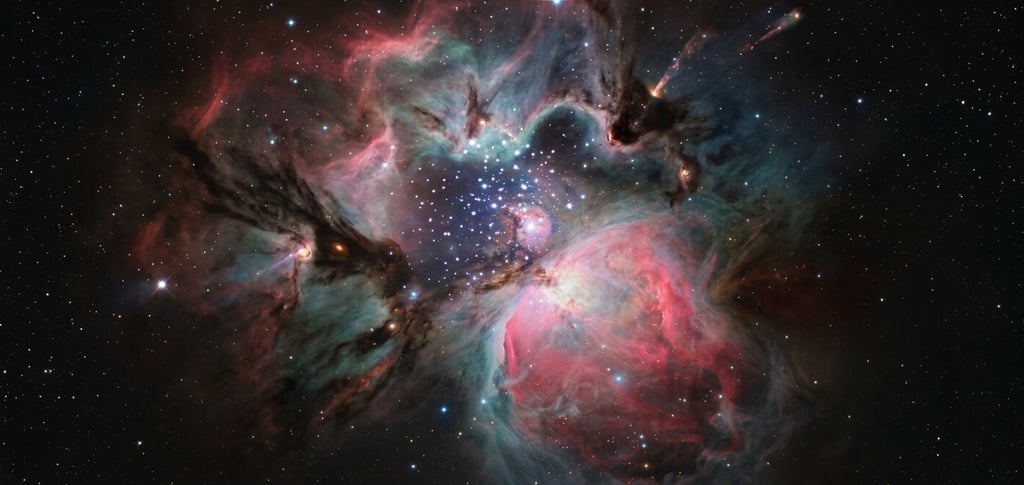
Birth: Stars begin in giant clouds of dust and gas called nebulae.
Main Life: They spend most of their time quietly burning hydrogen (like our Sun).
The End: When a star runs out of fuel, it can expand into a "Red Giant." Smaller stars eventually fade away, but the largest stars end in a massive explosion called a Supernova.
Why Do They Look Small?
Stars look like tiny dots because they are incredibly far away. The closest star to Earth (besides the Sun) is Proxima Centauri, which is about 40 trillion kilometers away. If you could drive a car there at highway speeds, it would take you 48 million years to arrive!
Every star you see in the night sky is a sun of its own, many of them much larger and brighter than our own.