Nebula : Nurseries of the Universe
A nebula (Latin for cloud or mist) is an enormous cloud of dust and gas occupying the space between stars.
UNIVERSE
Sandra
4/4/20262 min read
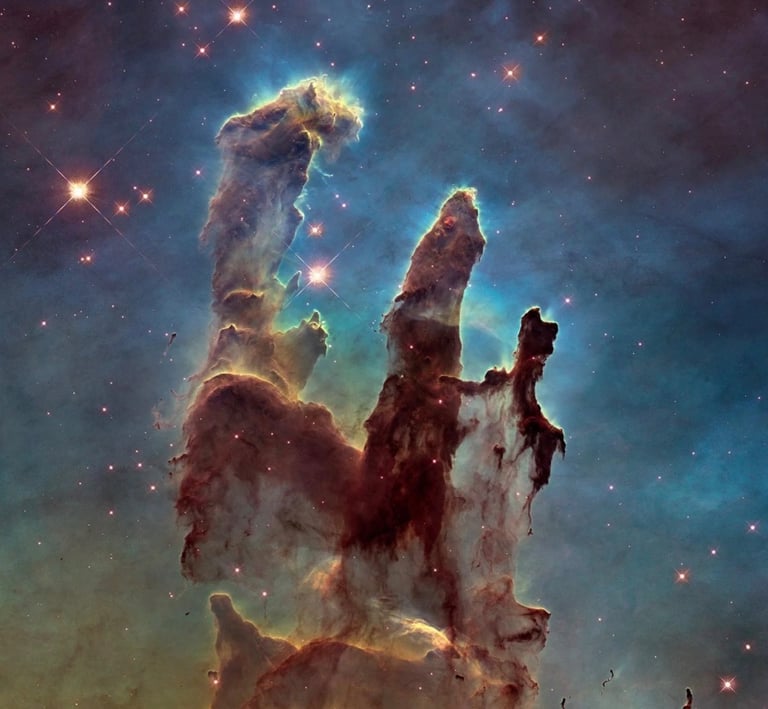
When a star is born , an enormous cloud of hydrogen and other gases are formed inside . These cosmic clouds are often referred to as the nurseries of the universe because they are the places where stars are born.
HOW STARS ARE BORN?
The gas clouds are called nebula. As clumps in the nebula attracts more gas , they grow larger and hotter until they ignite and become stars.
A nebula is primarily made up of
Hydrogen and Helium: The most abundant gases in the universe.
Cosmic Dust: Tiny particles of solid matter, including carbon and silicates
Plasma: Ionized gases that can glow when energized by nearby stars.
WHY ARE THEY COLOURFUL ?
The stunning colors we see in photos of nebulae (like those from the Hubble or James Webb telescopes) are caused by different chemical elements. For example, hydrogen often glows red, while oxygen can appear blue or green.
NEBULAS ROLE
Nebulae play two critical roles in the life of a star
Star Birth: Gravity pulls the clumps of gas and dust together. As the clumps get bigger, their gravity gets stronger. Eventually, the clump becomes so hot and dense that nuclear fusion begins, and a new star is born.
Star Death: When certain types of stars reach the end of their lives, they cast off their outer layers or explode in a supernova, creating new, colorful nebulae.
TYPES OF NEBULAS
Emission Nebula
Glows brightly because the gas is energized by nearby stars.
Example: Hydrogen gas often glows red.
Reflection Nebula
Doesn’t glow on its own; it reflects the light of nearby stars.
Usually appears blue because blue light scatters more.
Dark Nebula
Blocks light from stars behind them.
Looks like dark patches in the sky.
Planetary Nebula
Formed when a star dies and sheds its outer layers.
Surprisingly colorful and round.
Supernova Remnant
The leftover gas and dust from a massive star that exploded.
Very bright and energetic.
DO THEY MOVE ?
Nebulas aren’t still—they drift and swirl because of gravity, stellar winds, and explosions from nearby stars.
Over millions of years, these motions can form new stars or stretch the nebula into interesting shapes.
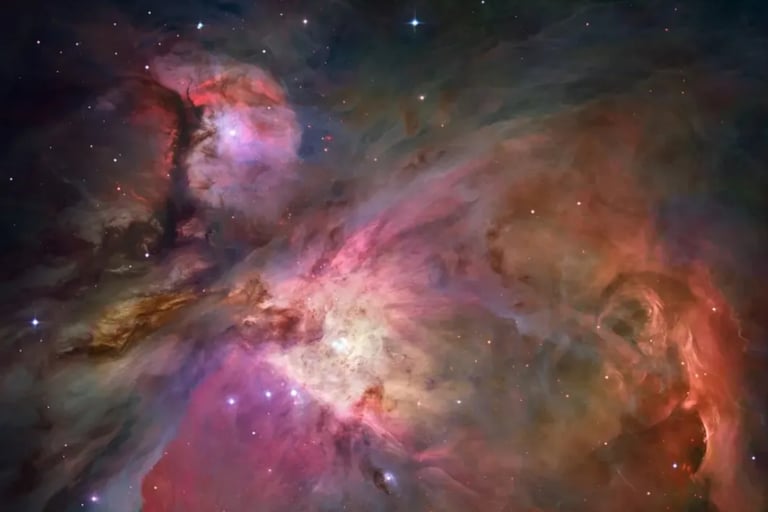
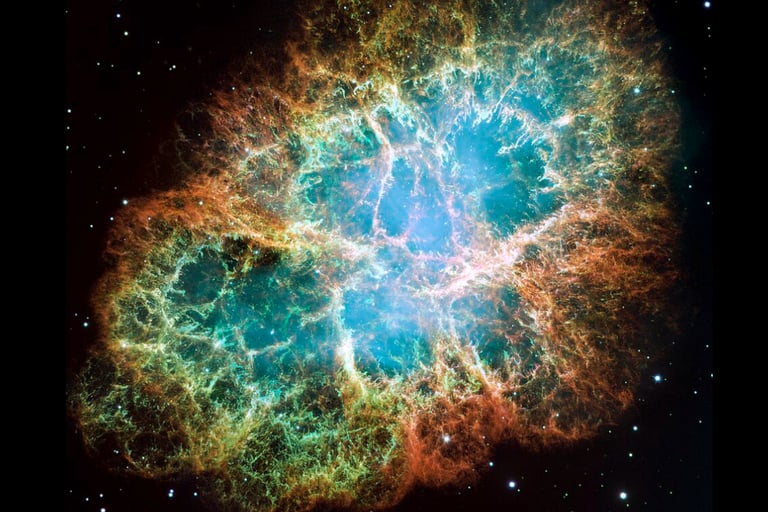
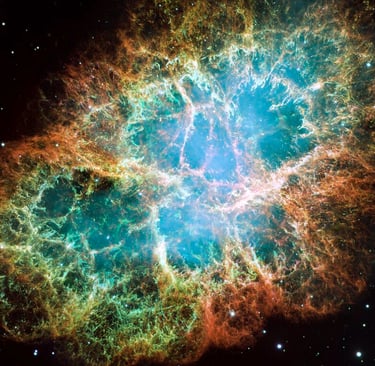
MESSIER 42 ( ORION NEBULA )
One of the brightest star nurseries visible to the naked eye.
CRAB NEBULA
The remains of a supernova explosion seen in 1054 AD.